

Analysis of Deformation of Cylindrical Objects Based on the Expansion of Point Clouds Onto a Plane
Workshop Description:
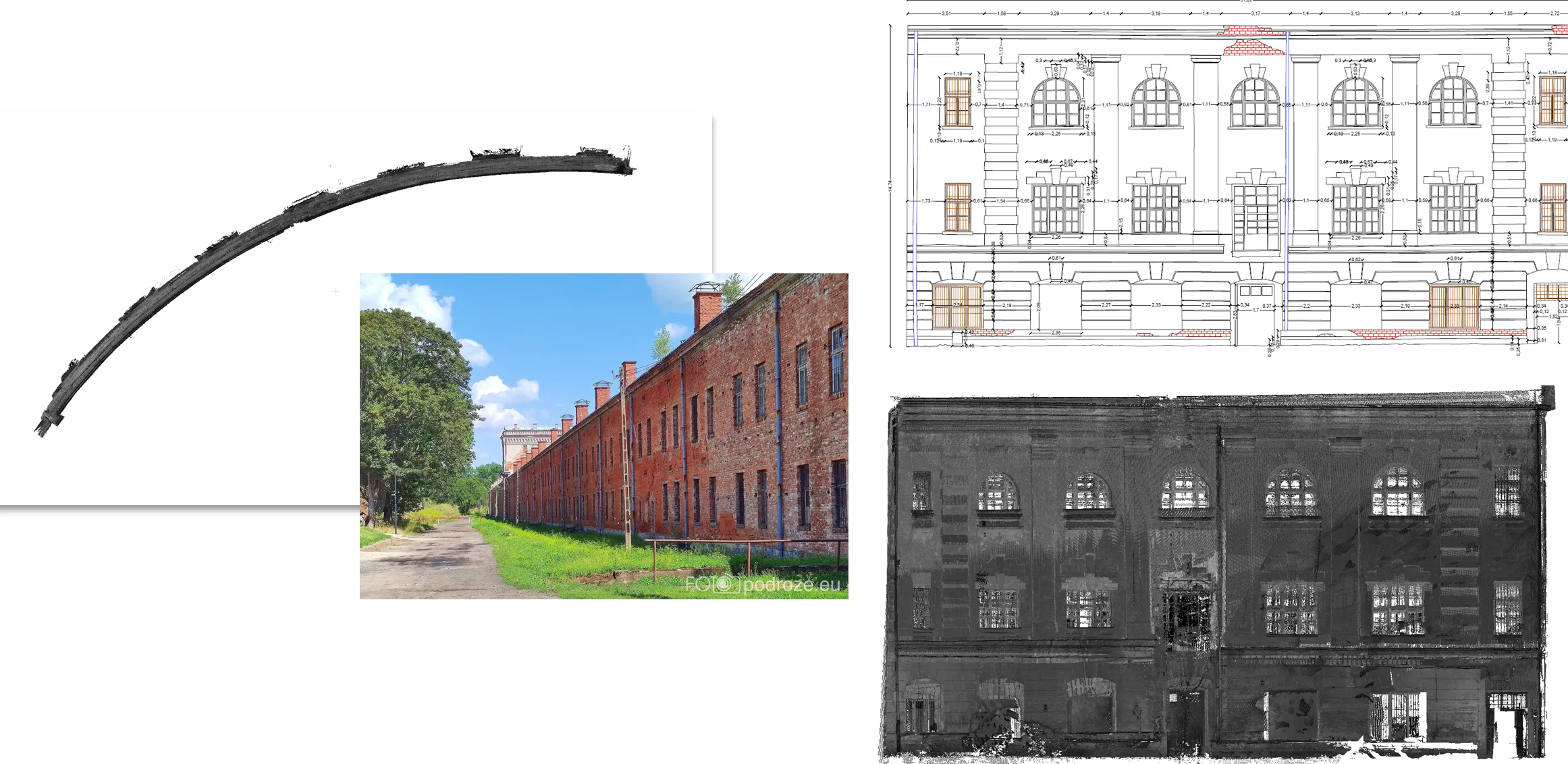
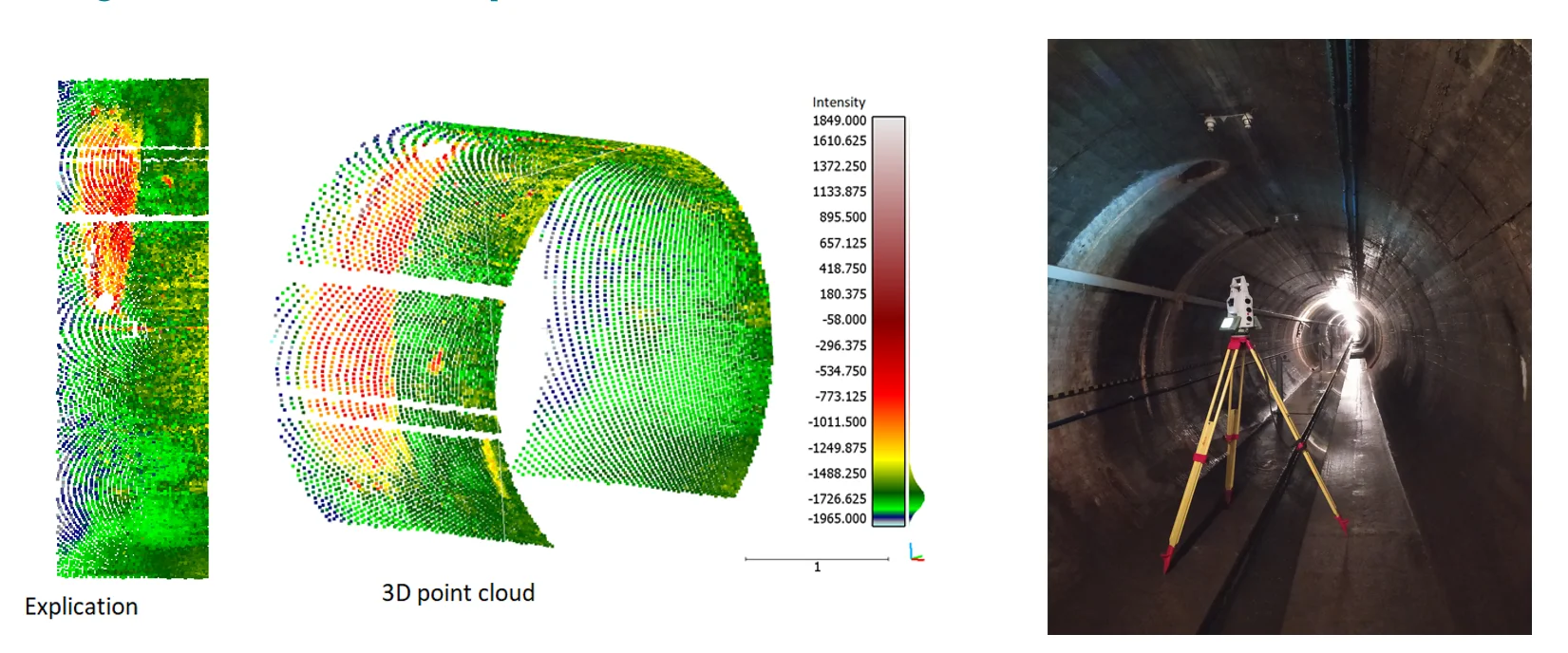
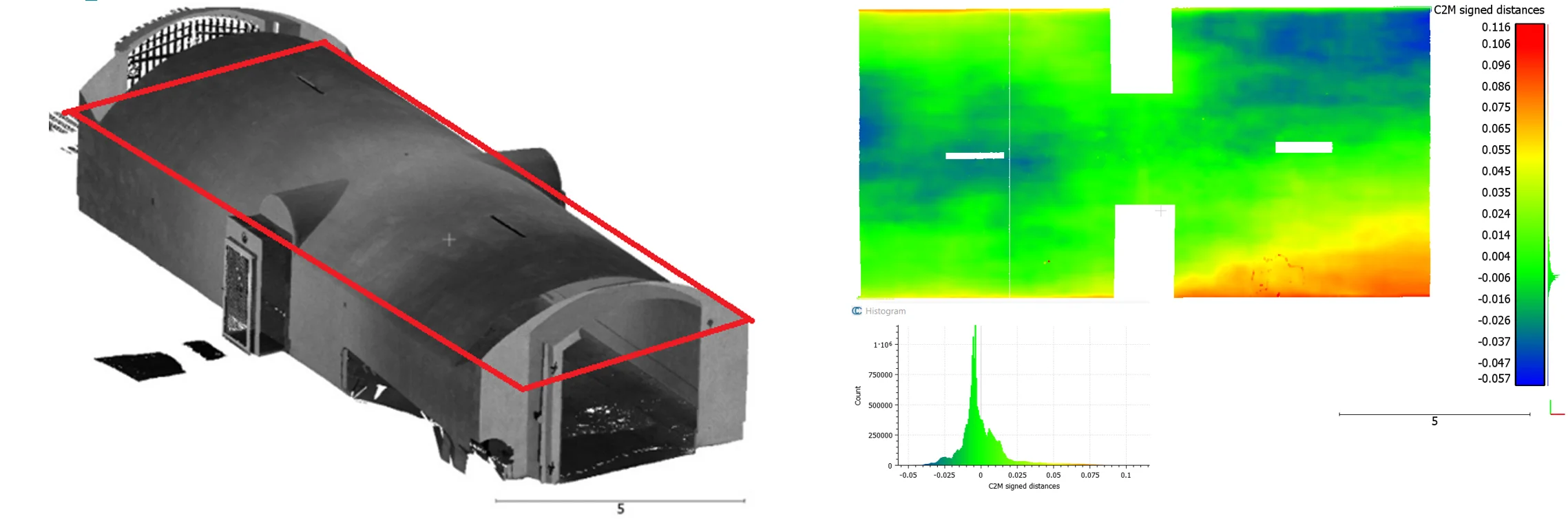
Terrestrial laser scanning technology allows for the acquisition of a dense point cloud in a very short time. This allows for a quasi-continuous surface model that precisely depicts the current shape of the measured object. In practice and in research, deformation analyses based on point clouds for objects with complex geometry are typically performed as cross-sections or by colouring the point cloud according to the adopted colour scale for the determined deformation values. However, both of these approaches have certain limitations. In the case of cross-sections, we analyse selected locations, thus reducing the quasi-continuous model to local/point analyses. When colouring the point cloud according to calculated deformation values, we must analyse the results in the form of a three-dimensional model using dedicated software; any flat representation of such data will result in mutual obscuration, unless the analysis concerns only a plane. Hence, the proposal to use surface-to-plane unfolding is a potentially beneficial approach for geometrically complex objects. In addition to the proper selection of unfolding parameters, it is crucial to analyse the accuracy of the obtained results in the context of the magnitude of the determined deformations. Tunnel objects, characterized by geometry similar to a cylinder, were used as examples. However, analysing their deformation is difficult not only due to their geometry but also to the specialized equipment and technical infrastructure present within.
During the workshop, participants will measure a selected object near the workshop room with a Leica RTC360 or Leica MS60 scanner, perform preliminary cloud processing and unwinding, and then analyse the deformation (analysis relative to the fitted plane) and surface coverage (analysis of recorded intensity values). During the workshop, data collected by the instructors on various objects prior to the Summer School will also be available for analysis.
The workshop begins with an introductory lecture, followed by hands-on data acquisition and processing under the guidance of an instructor. Database: point clouds measured on two different objects (i.e., vault, tunnel, pipeline).
Organizers:
- Univ.- Prof. Janina Zaczek-Peplinska
- Zbigniew Muszynski, Ph.D.
Target Group and Requirements :
Basic knowledge of MATLAB and of adjustment theory. Basic knowledge of CloudCompare